Last updated October 2026
New Zealand native plants are a natural fit for Pukekohe gardens and lifestyle blocks. They suit the climate, they feed tūī, kererū and pīwakawaka, and many need little care once they are settled. With hundreds of natives sold as garden plants, the hard part is choosing. This guide covers which natives work for different jobs around Franklin, how to plant them, and what to watch for.
★View the Best Plant Nurseries in Pukekohe→Why plant natives
According to the Department of Conservation’s guide to New Zealand native plants, around 80 percent of New Zealand’s trees, ferns and flowering plants are found nowhere else in the world. Planting them brings that flora back into gardens and farmland, and it gives native birds and insects food and shelter close to home.
Natives also have practical advantages. Many cope with wind and dry spells, most are evergreen, and a well-chosen native planting can look after itself after the first couple of years.
Natives for different jobs
- Hedges and screens
- Griselinia, pittosporum, coprosma, corokia, olearia
- Specimen and feature trees
- Kōwhai, tītoki, pūriri, pōhutukawa, cabbage tree (tī kōuka)
- Bird food
- Kōwhai, flax (harakeke), five finger, karamū, kōhūhū
- Groundcover and edging
- Rengarenga, native grasses, small coprosmas
- Wet ground and stream banks
- Harakeke, carex sedges, oioi, cabbage tree, mānuka
- Shade under trees
- Ferns, kawakawa, hangehange
These are starting points. A local nursery can tell you which suit your soil and exposure, and which grow too large for a town section.
Native plants for small gardens
On a Pukekohe town section, the risk is planting a forest tree in a space meant for a shrub. Pūriri and tītoki become large trees, while corokia, small coprosmas, hebes, rengarenga and flaxes stay compact. Check the mature height and spread on the label, and think about what will be under the tree in ten years: a path, a drain, a neighbour’s fence.
Natives on lifestyle blocks and stream banks
Many Franklin lifestyle blocks have a gully, a stream or a wet corner that suits native planting. Planting stream edges, often called riparian planting, helps hold banks together, shades the water and filters runoff from paddocks.
A typical approach is:
- Edge of the water: harakeke, carex and other plants that tolerate wet feet
- Bank: mānuka, kānuka, cabbage trees and coprosmas to stabilise the slope
- Top of the bank: larger trees once the first plants are established and providing shelter
Fence stock out first, otherwise they will eat or trample young plants. Plant closely so the canopy closes and shades out weeds.
When and how to plant natives in Pukekohe
Autumn through to early spring is the main planting season. The ground is moist and plants can establish roots before the dry months.
1. Clear grass and weeds from around each planting spot, at least half a metre across.
2. Dig a hole larger than the pot and loosen the soil at the bottom.
3. Plant at the same depth as in the container and firm the soil around the roots.
4. Water in, then mulch to hold moisture and suppress weeds.
5. Keep releasing plants from grass and weeds for the first two summers. Weed competition kills more young natives than anything else.
Pukekohe’s volcanic soils are generally free-draining and fertile, which suits most natives. Heavier ground on the flats or near streams stays wetter in winter, so choose plants to match.
Things to watch for
- Frost. Pōhutukawa and some other coastal natives are frost-tender when young. On cold flats, protect them for the first winter or choose hardier species.
- Wind. Exposed sites need tough pioneer plants first, such as mānuka, coprosma and olearia, with more delicate species planted in their shelter later.
- Pest plants. Some garden plants are pests in the Auckland region. Auckland Council’s Regional Pest Management Plan sets the rules, so check before planting anything given to you or bought privately.
Questions to ask before you buy
- How tall and wide will this plant be in ten years?
- Does it cope with frost, wind and wet winter ground?
- Is it a good food source for native birds?
- What grade of plant suits this job, and how closely should I plant?
- For larger plantings, can the plants be delivered and how far ahead should I order?
Getting NZ natives in Pukekohe
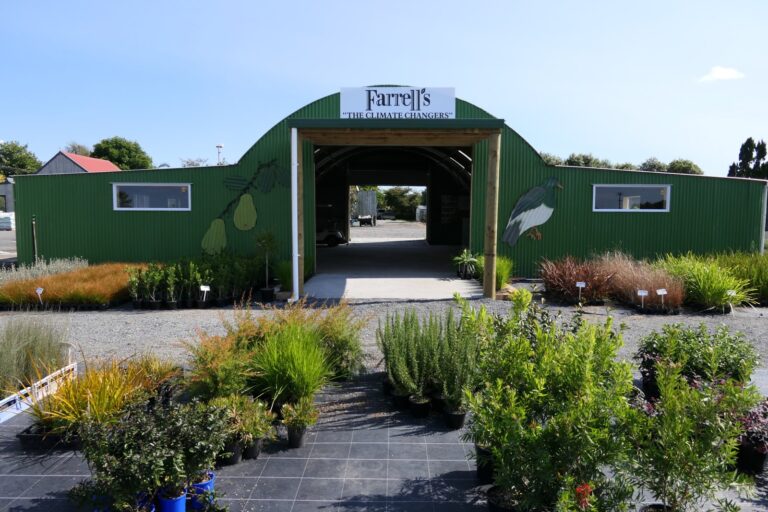
Farrell’s Nurseries is a family business on Pollock Road in Pukekohe that has grown its own plants for more than 35 years. Its range covers NZ natives from small shrubs to forest trees, along with grasses, flaxes, ferns and wetland plants, for gardens, lifestyle blocks, landscaping and subdivision projects. Staff can help match natives to your site, plants can be ordered online, and there is a delivery service for clients who select their own trees. You can also call 09 238 8606.