Last updated October 2026
Pukekohe is one of the country’s best-known growing districts, and a backyard fruit tree is a small part of that tradition. Feijoas, citrus, plums and apples all crop well around Franklin with the right spot and a little care. This guide covers which fruit trees suit Pukekohe, when to plant them, and how to give them a good start.
★View the Best Plant Nurseries in Pukekohe→Fruit trees that suit Pukekohe
Most of the fruit commonly grown in New Zealand does well in the Pukekohe area. The main things that decide success are frost, wind and winter chill.
Feijoa
- How it suits Pukekohe
- Very well suited
- Things to know
- Hardy, evergreen, can double as a hedge
Citrus (lemon, mandarin, orange)
- How it suits Pukekohe
- Well suited on warm, sheltered sites
- Things to know
- Frost-tender when young, needs shelter
Plums
- How it suits Pukekohe
- Well suited
- Things to know
- Some varieties need a pollination partner
Apples and pears
- How it suits Pukekohe
- Well suited
- Things to know
- Choose varieties for a mild winter
Peaches and nectarines
- How it suits Pukekohe
- Suited
- Things to know
- Watch for leaf curl in wet springs
Figs
- How it suits Pukekohe
- Suited on sunny sites
- Things to know
- Grow large unless pruned
Avocado
- How it suits Pukekohe
- Possible on frost-free sites
- Things to know
- Needs shelter and very good drainage
The Auckland Botanic Gardens grow and recommend fruit trees that crop well in Auckland without pesticides or fuss, which is a useful list to take with you when you shop.
Feijoa trees
Feijoas are one of the most searched-for fruit trees in New Zealand, and they are close to foolproof around Pukekohe. They tolerate wind, light frost and most soils, and they make a good hedge or screen as well as a fruit tree.
Planting two or more varieties usually improves fruit set, even with varieties described as self-fertile. Choosing early, mid and late-season varieties spreads the harvest across autumn.
Pollination and space
Some fruit trees need a partner to set fruit. Many plums, pears, some apples and cherries crop poorly on their own. Check the label or ask the nursery whether the variety is self-fertile, and if not, which varieties pollinate it.
If space is short, look at dwarf varieties and trees on dwarfing rootstock, or espalier a tree flat against a sunny fence.
When to plant fruit trees
- Deciduous fruit trees (apples, pears, plums, peaches) are best planted in winter while they are dormant. Many are sold bare-rooted or freshly potted at this time.
- Evergreen fruit trees (citrus, feijoas, avocados) are best planted in autumn or spring, avoiding the coldest weeks of winter and the driest weeks of summer.
How to plant a fruit tree
1. Pick a spot with full sun and shelter from strong wind.
2. Check drainage. Pukekohe’s volcanic soils usually drain well, but heavier soils on the flats can stay wet, and most fruit trees hate wet roots.
3. Dig a hole wider than the root ball and work in compost.
4. Plant at the same depth as in the pot. On grafted trees, keep the graft union above the soil.
5. Stake young trees in windy spots, using ties that do not cut into the bark.
6. Water in well, mulch around the base without touching the trunk, and water regularly through the first summer.
Feeding and pruning
Feed fruit trees in spring as growth starts, and again in summer for heavy croppers such as citrus. Prune pip fruit such as apples and pears in winter. Stone fruit such as plums and peaches are often pruned in summer after harvest to reduce disease risk.
Frost and wind around Franklin
Frost is the main risk for young citrus and avocados. Low-lying sections in Franklin can be several degrees colder than nearby slopes on a still winter night. Plant frost-tender trees near a north-facing wall, cover them on frosty nights for the first couple of winters, or choose hardier fruit for cold spots.
Wind dries out young trees and knocks off blossom. A hedge or shelter belt on the windward side makes a noticeable difference to how well an orchard crops.
Questions to ask before you buy
- Is this variety self-fertile, or does it need a pollination partner?
- How big will it grow, and is it on a dwarfing rootstock?
- Does it need much winter chill to fruit well here?
- Is it frost-tender while young?
- When does it fruit, and can I spread the harvest with another variety?
- How should I feed and prune it in the first few years?
Getting fruit trees in Pukekohe
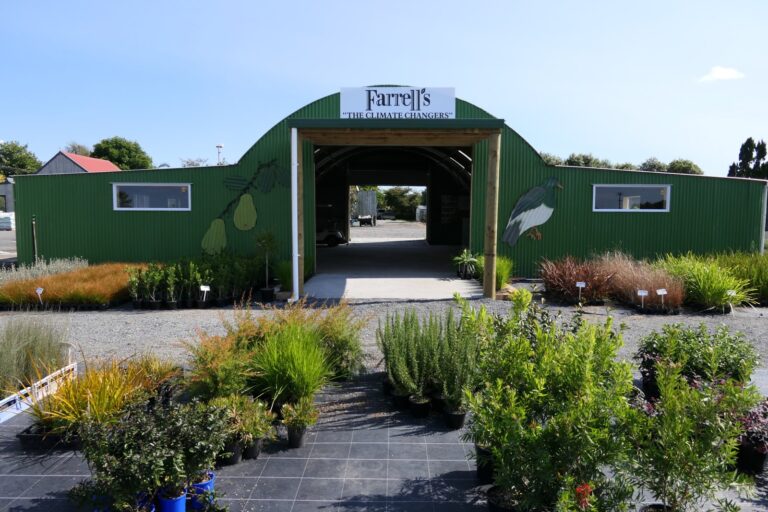
Farrell’s Nurseries is a family business on Pollock Road in Pukekohe that has grown its own plants for more than 35 years, including an extensive range of fruit and nut trees. The nursery also grows hedging and shelter plants that can protect a home orchard, and sells the Garden Grow range of fertiliser and potting mix. Plants can be ordered online, and there is a delivery service for clients who select their own trees. You can also call 09 238 8606.