Last updated October 2026
A good hedge does a lot of work on a Franklin section. It gives privacy from the road, takes the edge off the westerly, marks a boundary on a lifestyle block and shelters a vegetable garden or orchard. It also takes a few years to establish, so the plant you choose at the start matters more than almost any other garden decision. This guide covers how to pick a hedging plant for Pukekohe conditions, how to space and plant it, and what to expect in the first few years.
★View the Best Plant Nurseries in Pukekohe→Start with what the hedge is for
Before choosing a plant, be clear about the job:
- Privacy screen along a boundary or road, usually 1.5 to 2.5 metres tall
- Low formal hedge to edge a path or garden bed
- Shelter belt to break wind across paddocks, a house site or an orchard
- Wildlife hedge with flowers and berries for birds
A low clipped border and a three-metre shelter belt need completely different plants, and choosing the wrong one means years of fighting it with the trimmer.
Native or exotic?
Both work well around Pukekohe. Natives tend to be hardy once established and many attract birds. Exotic hedges such as camellias and some conifers give a denser, more formal finish.
Griselinia (kāpuka)
- Native or exotic
- Native
- Suits
- Privacy, coastal sites
- Notes
- Glossy leaves, tolerates wind
Pittosporum (kōhūhū)
- Native or exotic
- Native
- Suits
- Privacy, medium hedges
- Notes
- Fast and easy to clip
Coprosma
- Native or exotic
- Native
- Suits
- Low to medium hedges, coastal
- Notes
- Tough, many leaf colours
Corokia
- Native or exotic
- Native
- Suits
- Low formal hedges
- Notes
- Small leaves, slower growing
Olearia (akiraho)
- Native or exotic
- Native
- Suits
- Windy and coastal sites
- Notes
- Grey-green leaves
Camellia sasanqua
- Native or exotic
- Exotic
- Suits
- Formal privacy hedges
- Notes
- Autumn flowers, slower
Lophomyrtus (ramarama)
- Native or exotic
- Native
- Suits
- Low colourful hedges
- Notes
- Purple and variegated forms
Use this as a shortlist to take to a nursery, not a final answer. Soil, exposure and how much trimming you want to do all shift the choice.
Fast-growing hedges: the trade-off
Fast-growing hedge plants are the most searched-for option for a reason: nobody wants to wait five years for privacy. The catch is that a hedge which grows quickly also needs trimming more often, and some fast growers get leggy at the base if they are not clipped from the start.
If speed matters, ask the nursery which plants put on height quickly but still stay dense when trimmed regularly. Pittosporum and griselinia are commonly chosen for this.
Pukekohe conditions to plan for
- Wind. Open country around Pukekohe, Patumahoe and Buckland takes the prevailing westerlies. Plant a tougher species on the windward side, or use a shelter belt to protect a finer hedge.
- Frost. Low-lying parts of Franklin get frosts that the hilltops avoid. Frost-tender plants such as some pōhutukawa forms struggle on cold flats.
- Soil. Much of Pukekohe sits on free-draining volcanic soil, which suits most hedging. Heavier or wet ground nearer streams needs plants that tolerate damp roots.
- Coastal sites. Around Waiuku, Clarks Beach and the Āwhitu Peninsula, salt-tolerant plants such as griselinia, coprosma and olearia hold up better.
How far apart to plant a hedge
Spacing depends on the plant and how quickly you want it to close up. As a general guide:
- Low formal hedges: about 30 to 50 cm apart
- Medium privacy hedges: about 50 to 80 cm apart
- Shelter belts: often 1 to 2 metres apart, sometimes in two staggered rows
Closer planting gives a solid hedge sooner but costs more in plants. Measure the run first and work out the number of plants before you visit, so the nursery can tell you what grade and quantity makes sense.
Planting and the first two years
1. Plant in autumn or winter where possible, when the ground is moist.
2. Clear grass and weeds along a strip at least a metre wide, because grass competes hard with young hedges.
3. Dig in compost, plant at the same depth as the pot, and water in well.
4. Mulch along the row to hold moisture and keep weeds down.
5. Water through the first summer, especially in dry spells.
6. Trim lightly from early on to encourage branching low down. Waiting until the hedge reaches full height before clipping is the most common reason for a hedge that is bare at the base.
Shelter belts on lifestyle blocks
A shelter belt is a bigger investment than a garden hedge, and it is worth planning the whole run on paper first. Think about which way the wind comes from, where shade will fall on paddocks or the house as the trees grow, and access for trimming machinery later. Mixed native shelter belts can also provide habitat for birds and stabilise wet ground near drains.
Before you plant, check that nothing you have chosen is listed as a pest plant. Pukekohe is in the Auckland region, so Auckland Council’s Regional Pest Management Plan sets the rules on pest plants under the Biosecurity Act.
Getting hedging and shelter plants in Pukekohe
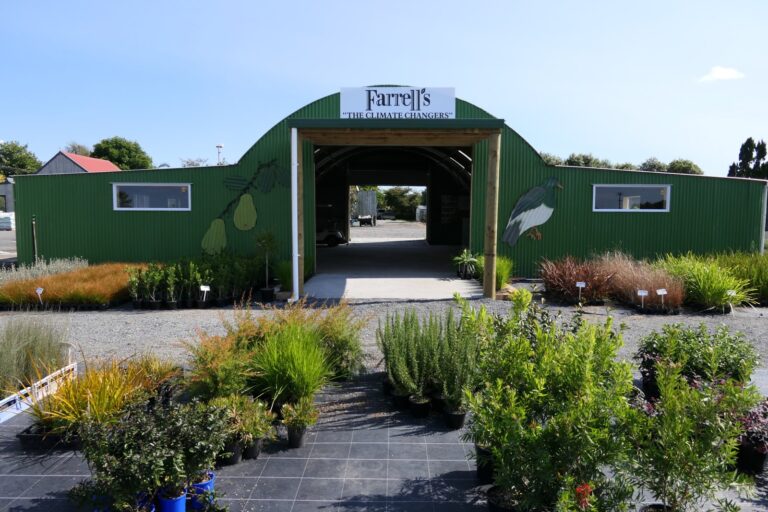
Farrell’s Nurseries is a family business on Pollock Road in Pukekohe that has grown its own plants for more than 35 years, including hedging and shelter belt plants, NZ natives and specimen trees. The nursery supplies home gardens, lifestyle blocks, landscaping and subdivision projects, and staff can advise on a variety that suits your property. Plants can be ordered online, and there is a delivery service for clients who select their own trees. You can also call 09 238 8606.